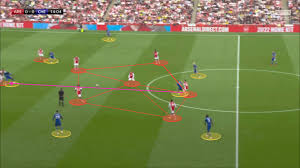
The Thai title focuses on the opposite side of the totals market: how to select “unders” in Serie A 2021/2022 by reading defensive styles and how teams controlled tempo. Instead of assuming Italy automatically means low scores, the idea is to isolate specific profiles—deep blocks, slow-possession sides, game-state managers—that systematically suppressed goal volume. When those profiles face each other or meet certain opponents, the odds on under-goals can drift away from the true probability, creating opportunities for disciplined bettors.
Why Defensive Style and Tempo Are a Natural Basis for Unders
Totals betting revolves around how many chances become goals, and chance volume is heavily shaped by defensive approach and match tempo. Long-standing perceptions of Serie A as defence-first are partly grounded in reality: analysis pieces reiterate that Italian clubs have long emphasised structure, compactness and tactical control, often leading to lower average goal counts than some other major leagues. In seasons where teams double down on that conservatism, games with certain match-ups naturally gravitate toward lower totals.
Football betting strategy articles point out that slow-possession teams and compact defensive sides reduce the number of high-quality attacks for both teams by slowing transitions, compressing space and favouring risk-averse decisions. When both sides share those traits, overall tempo drops, shot counts shrink, and the distribution of potential scorelines shifts toward 0–0, 1–0 and 1–1. That is exactly the territory where under 2.5 or even lower lines can be justified, provided the price still assumes a more “normal” goal environment.
How 2021/22 Serie A Looked in Terms of Defence and Goals
Serie A 2021/22 did not hit historic lows for scoring, but its reputation still rested heavily on tactical organisation and defensive discipline. League-wide summaries emphasise the persistence of well-drilled back lines and compact shapes alongside more modern attacking ideas. Defensive-focused clubs and pragmatic coaches leaned on low or mid blocks, using tight spacing in the defensive third to channel opponents into less dangerous zones, prioritising clean sheets and game management over expansive play.
Team stats for that season list goals conceded and clean sheets by side, revealing clusters of teams that consistently allowed fewer than 1.1–1.2 goals per game and kept a high share of clean sheets. Betting guidelines on unders suggest those are key criteria for under 2.5 consideration when both teams in a match fit similar profiles and do not compensate with heavy attacking firepower. That is especially true in midtable clashes where neither side has overwhelming motivation to take risks.
Mechanisms by Which Defensive Styles Kill Games
Defensive shape and coaching habits influence both where and how often shots are taken. Low-block teams drop their lines near the box and stay narrow, forcing opponents to circulate the ball around the block and resort to crosses or long-range efforts. This tends to increase shot volume from low-xG zones while heavily restricting central, high-probability chances. Even in matches with many attempts, the expected goals total can stay modest, keeping actual scoring down over time.
Slow-possession sides reduce tempo by methodically building from the back, prioritising secure passes and recycling the ball rather than playing vertical risk passes at every opportunity. When both teams share this approach, sequences of play lengthen, the number of transitions shrinks and total shot counts fall. Cross-sport work on pace and totals emphasises that lower tempo equals fewer scoring events and better conditions for unders when defences are competent. In football, that effect is compounded when coaches are content to hold a narrow lead or a draw rather than chase a second or third goal.
Conditional Scenarios: When Defensive Sides Don’t Produce Unders
“Defensive” does not guarantee low scores. If a compact side concedes early, its game plan breaks: it must push numbers forward, open up lines and increase tempo to chase the game, which can turn a previously under-shaped match into a higher-event one. Similarly, if a defensive team faces a high-press, high-chance opponent whose structure reliably creates big chances, the favourite might accumulate enough xG to hit overs even against a disciplined back line.
Situational context can also override stylistic tendencies. In must-win relegation games or final-day scenarios, teams that usually control tempo may abandon caution and attack more aggressively, especially late on. Unders based solely on season-long defensive identity without accounting for game state incentives and standings risk underestimating these bursts of risk-taking.
A Table for Profiling Defensive and Tempo-Based Under Candidates
To turn these concepts into a practical filter, you can summarise key metrics for teams whose defensive style and control of rhythm align with unders. League stat sources offer goals for/against, clean sheets, and sometimes tempo proxies like passes per game or possession share.
| Dimension | What to Check Over a 2021/22-Type Season | Under-Goals Interpretation |
| Goals conceded per match | Both teams allowing around ≤1.1–1.2 goals per game | Strong baseline for lower totals if attacks are average |
| Clean sheet percentage | Each side keeping clean sheets in 40%+ of games | Signals robust defensive organisation |
| xG against profile | Low xG against per match, especially from central zones | Confirms that few high-quality chances are allowed |
| Possession & tempo | One or both teams with slower, control-oriented possession | Suggests fewer transitions and lower play volume |
| Over/under history | High share of under 2.5 in matches between similar sides | Evidence that style match-up tends to suppress goals |
| Coaching game-state habits | Tendency to protect leads rather than chase margin | Encourages early tightening once ahead, favouring unders |
When a fixture features two teams that tick most of these boxes—solid defences, low xG against, slow tempo and risk-averse game-state habits—you have a structural case for under goals. If market odds still imply an “average” goal environment, that is where value may appear, especially around the 2.5 line.
Integrating UFABET into a Defence-and-Tempo-Centred Workflow
Once you have filtered Serie A 2021/22 fixtures by defensive and tempo criteria, you still need to express your view through actual bets. When your analysis suggests that two structurally cautious teams with strong defences are likely to produce a low-event match—say, a midtable clash where both are comfortable with a draw—your edge lies in unders rather than sides. The practical question then becomes which line and price to take. Under 2.5 is a standard, but in some 2021/22-type scenarios under 3.0 or under 1.5 may be more appropriate depending on modelling. In this phase, access to a versatile football betting destination such as ยูฟ่าเบท matters because it typically offers multiple totals (2.0, 2.25, 2.5, 2.75, 3.0), allowing you to align risk with conviction—taking a more conservative lower-payoff under 3.0 when you only expect a slightly subdued game, or a bolder under 1.5 when everything points to a tight tactical battle, all built explicitly on your read of defence and tempo rather than on guesswork.
Using Lists to Turn Defensive Reads into Pre-Match Unders Checks
To keep your process structured and avoid overrating every “defensive” fixture, a checklist is useful. Unders-focused strategy pieces recommend combining defensive metrics, tempo, and situational considerations before committing. For a 2021/22 Serie A match, a pre-match routine might look like this:
- Review goals conceded per match and clean sheet percentages for both teams over the season and last 8–10 games; prioritise fixtures where both show strong defensive numbers and a high share of clean sheets.
- Check xG against and shot profiles to ensure defences are genuinely limiting chance quality, not just riding keeper form or luck; low xG against from central zones is a positive sign.
- Assess each side’s possession and tempo tendency: do they build slowly and recycle the ball, or do they favour quick transitions? Slow, control-based teams are better candidates for unders.
- Cross-reference historical over/under data for similar match-ups or stylistically comparable opponents, looking for consistent under 2.5 patterns rather than one-off low scores.
- Factor in table context and stakes; be cautious with unders in must-win games or final-day scenarios where desperation can override normal conservative habits.
- Confirm lineups, focusing on key defenders, holding midfielders and goalkeepers; missing core defensive pieces can undermine an under even if the overall style points that way.
- Compare your estimated probability for under the main line (2.5 or alternative) with market odds, and skip matches where pricing already reflects all the defensive and tempo advantages you have identified.
This kind of list ensures that “good defences and slow tempo” is not just a label, but a conclusion reached after checking that both numbers and context align with your narrative. It also encourages you to pass when important conditions—like defensive personnel or stakes—point away from a typical low-scoring script.
How “casino online” Context Alters Use of Defence-Driven Unders
Even with a robust read on defensive style and pace, the environment where you bet dictates which versions of the under strategy you can implement. Many bettors now operate within casino online ecosystems where football totals, side markets and in-play lines exist alongside other products. Guides that discuss style-based betting strategies stress that the granularity of available lines—first-half unders, alternative totals, and in-play opportunities—is crucial for exploiting slow, low-event matches.
If your analysis of a 2021/22-style Serie A fixture indicates a slow start with cautious defences, but the casino online website you use only offers a full-time 2.5 line, your options are limited. In richer environments, you can instead focus on first-half unders if you expect a particularly cagey opening, or use live betting to reinforce your under position if tempo and shot volume remain low after 15–20 minutes. The structure of the digital context therefore determines whether your defensive and tempo insights can be expressed with precision or only through blunt full-time totals.
Failure Modes When Banking on Defence and Control
Even carefully reasoned unders can fail. One common failure mode is an early goal from a set piece, error or deflection; that can radically alter game state, forcing a cautious team to open up, pushing tempo higher and increasing the risk of a second or third goal. Another is underestimating the attacking quality of one side: a team with elite forwards and a high xG profile may find ways to break through even against a disciplined defence, especially if the underdog makes small positional mistakes.
There is also the risk of misreading tempo. A supposedly slow-possession team may decide to press higher in a specific match or introduce more direct play, often in response to criticism, standings pressure or tactical adjustments. If you anchor too heavily on outdated stylistic labels and ignore recent data on shots and possession, you can end up betting unders in games where both coach and players have already shifted toward a more open approach. Recognising these failure modes keeps you alert to the need for constant updating and for in-play adjustments when the match diverges from the pre-match script.
Summary
Choosing low-score bets in a season like Serie A 2021/2022 from defensive style and tempo control means treating goals as the end product of structure rather than as random events. Italian clubs with compact defensive blocks, low xG against and slow, possession- or control-oriented play naturally generated fixtures where total chance volume and scoring stayed modest, especially when matched against similarly cautious opponents. By organising those defensive and rhythm traits into clear metrics and checklists, then aligning them with flexible under-goals markets in modern digital environments, you can turn the league’s defensive tendencies into a disciplined under strategy—while remaining aware that early goals, tactical tweaks and high-stakes contexts can quickly shift even the most solid-looking low-scoring script into more chaotic territory.

- The Enterprise PPC A-List: 10 Agencies for Scaling Paid Search Revenue in 2026 - October 20, 2026
- Golden OTT guide: setting up a new television with a verified guide - October 16, 2026
- Crusado Casino for Beginners: Essential Information About Game Categories, Registration Requirements, Bonus Conditions, Account Security, and Online Casino Guidelines - October 14, 2026