Why Business Model Choice Matters From the Start
A business model defines how a company creates value, delivers that value, and earns revenue from it. Many early-stage founders focus first on the product, but the structure behind the product often determines whether the business can survive. Two companies may sell access to the same kind of solution, yet one grows through recurring revenue while the other depends on one-time transactions or manual delivery. In digital markets, where attention can move from software platforms to entertainment products such as jetx game, the contrast also shows how business design shapes revenue timing more than the item itself.
The subscription, marketplace, and service-based models are among the most common structures in modern business. Each one can work well, but each depends on different economics. The main differences appear in revenue predictability, operational complexity, scaling logic, and customer retention pressure.
Understanding these differences matters because the wrong model can create structural weakness even when demand exists.
What a Business Model Actually Changes
A business model is not just a pricing method.
It influences:
- how customers enter
- how revenue is collected
- how costs behave over time
- how the business expands
- where the main risks appear
A founder may have a useful product, but if the revenue model is unstable or the delivery model is too labor-intensive, growth becomes difficult.
That is why business models should be compared not only by popularity, but by operational fit.
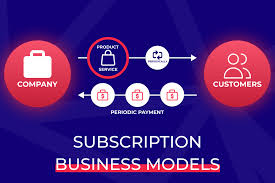
The Subscription Model
How It Works
In a subscription model, customers pay regularly for continued access to a product or service. Payment may be monthly, quarterly, or annually.
This structure is common where value is consumed over time rather than in a single purchase.
Examples in general form include:
- software access
- education platforms
- recurring content
- maintenance services
- membership-based services
The core feature is continuity. The customer is not buying one transaction. The customer is paying to continue receiving value.
Why Businesses Choose It
The main advantage of subscription is revenue visibility.
When customers renew regularly, the business can forecast income more accurately. This improves planning for hiring, product development, and marketing.
The model also allows customer value to accumulate over time. Instead of earning once, the business may earn from the same customer across many months.
The Main Risks
Subscription businesses face strong retention pressure.
If customers leave quickly, recurring revenue becomes unstable. This creates a situation where growth exists on the surface, but real performance remains weak because new customers only replace lost ones.
The main questions in subscription are:
- How often do customers renew?
- How long do they stay?
- Does the product remain useful over time?
A weak subscription business often fails not because it cannot attract buyers, but because it cannot keep them.
The Marketplace Model
How It Works
A marketplace connects two or more sides of a transaction, usually buyers and sellers.
The platform itself may not own the product or service being exchanged. Instead, it creates the environment where participants find each other, compare offers, and complete transactions.
Revenue usually comes through:
- commissions
- listing fees
- transaction fees
- premium placement
The platform earns by facilitating exchange rather than producing all value directly.
Why Businesses Choose It
The marketplace model can scale efficiently once participation becomes strong on both sides.
A marketplace benefits from network effects. This means the platform becomes more useful as more buyers and sellers join. More sellers attract more buyers. More buyers attract more sellers.
When this dynamic works, growth can accelerate without the platform performing every transaction manually.
The Main Risks
The marketplace model is difficult at the beginning because it requires both sides to join early.
A platform with many sellers but few buyers has weak activity. A platform with buyers but no supply also fails.
This creates a classic early-stage challenge: liquidity.
The platform must solve:
- enough useful supply
- enough active demand
- enough trust to complete transactions
Marketplaces also face quality control problems. If sellers perform poorly, the platform’s reputation suffers even if the platform did not provide the service directly.
The Service-Based Model
How It Works
In a service-based model, revenue comes from direct work performed for the client.
The business sells labor, expertise, execution, or support rather than access to a platform or a system of third-party exchange.
Examples include:
- consulting
- design work
- legal support
- repair services
- operational assistance
The business is paid because the client needs a defined result.
Why Businesses Choose It
The service-based model is often the easiest one to start.
It usually requires less upfront capital than other models because the founder can begin with personal skill, existing tools, and direct outreach.
It also allows quick market entry. A useful service can be sold before large infrastructure is built.
For many founders, service work is the first commercial step because it creates immediate cash flow.
The Main Risks
The main limit in service businesses is capacity.
Revenue often depends on time, expertise, and human delivery. This means growth can slow once the founder or team reaches workload limits.
Service businesses also face variability in revenue if work is project-based rather than contract-based.
The central challenge is how to grow without making quality unstable or labor costs too high.
Comparing Revenue Logic
Subscription Revenue
Subscription revenue is recurring.
It depends on retention and continued relevance.
Marketplace Revenue
Marketplace revenue is transactional.
It depends on volume, platform trust, and network strength.
Service-Based Revenue
Service revenue is earned through direct delivery.
It depends on expertise, reputation, and available capacity.
Each structure creates a different financial pattern.
Subscription aims for predictability.
Marketplace aims for scalable transaction flow.
Service-based models aim for direct monetization of skills.
Comparing Operational Complexity
Subscription businesses often need:
- product consistency
- ongoing support
- churn reduction
Marketplace businesses often need:
- buyer-seller balance
- trust systems
- dispute management
Service businesses often need:
- delivery process
- time management
- client communication
This means a business model should match the founder’s strengths.
A founder strong in product systems may prefer subscription.
A founder strong in platform coordination may prefer marketplace.
A founder strong in expertise and execution may prefer service.
Which Model Scales More Easily
Scale depends on what must increase for revenue to grow.
In subscription, one product can often serve many customers with limited added delivery cost.
In marketplace, the platform can scale strongly if activity becomes self-reinforcing.
In service businesses, scale is often slower because more clients usually require more labor unless systems or teams are added.
This does not make service businesses weak. It simply means their scaling path is different.
Hybrid Models Also Exist
Many businesses combine models over time.
For example:
- a service business may later add subscription support
- a subscription business may build a marketplace layer
- a marketplace may sell premium services directly
This often happens when the original model creates enough customer insight to justify expansion.
Conclusion
Subscription, marketplace, and service-based models each solve the same core question in different ways: how does the business capture value from market demand?
Subscription focuses on continuity.
Marketplace focuses on connection.
Service-based models focus on direct execution.
No model is universally better. The stronger choice depends on the product, the customer behavior involved, and the founder’s ability to manage the specific risks built into that structure.

- RaxiWin Pre-Session Checklist — A Five-Minute Routine Before Playing - September 14, 2026
- Veer Game App Download Guide for New Android Users - September 12, 2026
- DmFirst Game Login Guide – Everything You Need to Know - September 2, 2026